Multiple intelligence and it’s influence
As I started writing this post, a thought loomed…will the readers be hooked on to reading this article till the end?
May be few of you will look for images associated to the topic, while others might look for some video link related to my post and a few might look for catchy phrases highlighted in bold words to obtain the main idea of this article. Some of you may scroll down to see if I have included any activity that would interest your students. I think, I should even explore the idea of including an audio version of this content.
Why should I consider all these possibilities? Well, this explains the theory of multiple intelligence and the learning style of every reader who reads this article.
I would like to begin this week’s article with a virtual handshake to each and every teacher out there in the field. I look up on teachers’ as …
Talented,
Enthusiastic,
Ambitious,
Charismatic,
Holistic,
Energetic and a
Resourceful person who makes a difference in students’ life
With all these qualities inbuilt in them, over a period of time through experiences and knowledge gain, there is always a vacuum some where in the heart and mind that doesn’t allow them to completely take the credit of the value add they do through teaching.
If only I knew how to make him understand that multiplication is just repeated addition!
If only I knew how to make that girl focus during this video session?
If only I knew how to help her in learning to balance that chemical equation?
Often a teacher feels guilty of not being able to figure out, why some children can’t attain maximum potential. When will these children reach the threshold of self- learning?
Let me digress to another scene which is just like our own class room the only difference being we listen and some one else conducts that session. Yes, it’s nothing but the teacher training workshop that we attend as a part of professional development programme.

(Anna university teachers at ‘dealing with stress’ workshop)
Have you ever wondered when we attend an in-service workshop conducted at school or elsewhere, there is a standard flow of events during the course of the workshop.
- A talk by renowned personality
- PPT with visual clips and /or audio
- There is a group discussion and presentation, it could be a group presentation or individual the choice is given to the attendees,
- Finally, there is feedback or brainstorming on how this could be applicable in our classrooms
An adult workshop is planned so carefully keeping in mind that, in a huge crowd of teachers there could be people with different learning styles. Some will verbally read and learn newer things, some pick cues from visual aids, a few who will participate only during group discussions( and are not comfortable to speak in the crowd) and last but not the least there are individuals who may take away the crux only towards the end of workshop during the summation.
It is apparent that “Each of us do learn, in one way or the other”. “Each of us possess one or more intelligence as innate quality”
Well I am sure you can link this with our own student group too!
To represent this pictorially,

As teachers, we need do a bit of self analyzing of our own learning style first to maximize the learning outcome of students.There is a valid reason behind this. It is obvious that the way we are comfortable in learning, influences to a greater extent in our lesson planning too.If you can associate yourself to any one of these styles given above, you know how most of your sessions are going to be.You could even share the lesson plan you make with your colleague to check if there are variety in approaches and in testing.
Some tips that can help you maximize your learner’s learning is to work in collaboration with other teachers. It can be planned as,teachers who handle other subject areas for same grade or teachers who handle same subject area in other sections. By allowing other teacher of same subject expertise to take few of your sessions, students will benefit from different teaching styles.This idea of exchanging sessions can be done either at the introduction stage of the new topic or towards the end while revisiting(revising) the topic . In my experiences I have seen students come up with some points that you may not have taught them.They even mention how and when they learnt it.This implies there was another method from where the student learnt it.
You could be an expert in content delivery (linguistic/verbal intelligence), well your peer could be excellent in conducting a quiz or a game based on the concept(kinesthetic or logical intelligence).An art teacher who has the artistic intelligence can motivate a child to illustrate their understanding based on the academic topic where as an English teacher who has linguistic intelligence may help with framing sentences for definitions or give a better choice of words for explanations. An art teacher can even motivate children to include comic strips and cartoons in a creative writing session.This might interest student to write. I am only suggesting few changes here and there which we tend to over look or even assume its not our zone of teaching.
It’s a community of students, so we too must attend to them as community of teachers and not as an individual who is solely responsible for his/her growth.
When we as an individual possess one or more intelligence by nature, it is inevitable in an organisation like school where there are thousands of children, with different intelligence pooled together, I suggest that we initiate a different learning process for that child, tapping the right intelligence.
It is true that children blossom at different pace and to go by the saying,’ One Size Doesn’t Fit All’, let there be enough scope for various approaches in our teaching style.
Too much of play-way method will not satisfy a logic-smart student and repetitive problem solving methods may not interest an art-smart student.
There is so much of thinking that happens and effort that goes in to every teacher’s session plans. A teacher must be conscious while making lesson plans, toprovide scope for teaching the same concept in different styles to maximize that ZPD.
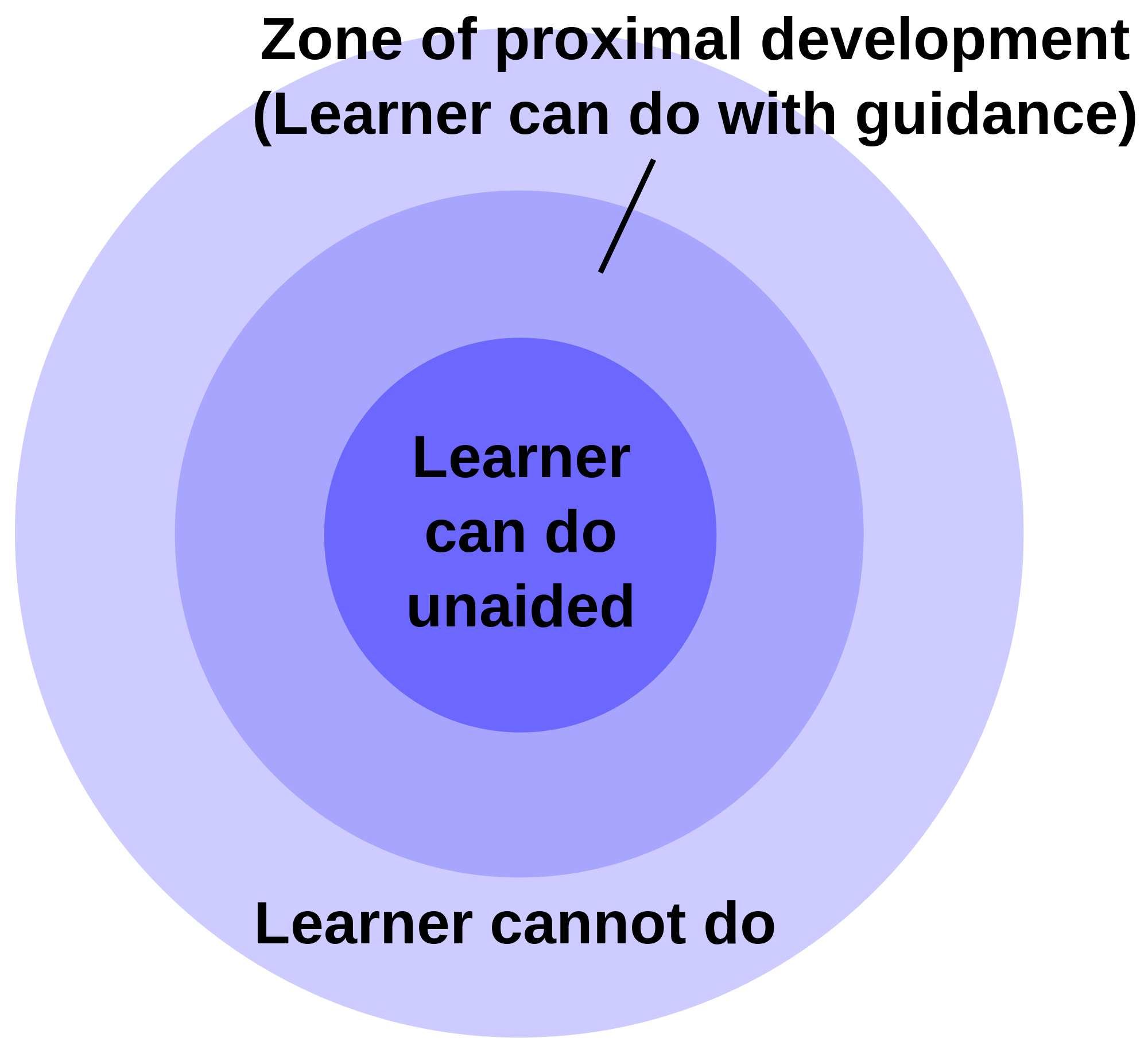
Though the underlying principle is same when it comes to MI and different learning styles there is a difference conceptually.
Please check the following link to get more insight in to Multiple intelligence Vs Learning style.
All these research, established hypothesis are to support the teachers to be more successful in her/his aim of reaching students with ease.
My suggestion to teachers would be to plan their formative assessment and every day task providing scope for MI concept. This will enable teachers to actually get proof of their student’s learning on whether they actually got the idea behind the lesson.
- Are they good in concept ?
- Is it only their ‘writing/presentation’ problem?
- Can they represent it in flow chart or an illustration?
- Will they explain it verbally in an organised fashion?
- Can they depict their learning in a chart?
- Will they be able to use concrete objects to express their understanding?
- Will he remember the math tables if I encourage him/her to recite it?
Also think about collaborating with other teachers to share the sessions so that the different teaching & learning styles are considered.
Above all, “A teacher who teaches the student is preferred than a teacher who teaches the curriculum”.
Be smart. Be efficient. Be a continuous learner.


